The Name at the Top of the Chart
For five months, the case known in the Japanese press as Kami no Esute—"God's Esthe"—had produced arrests at the edges: therapists, room managers, the seven people booked in Chiba in early July over a rebranded offshoot. On July 9, according to reporting the following day by Fuji News Network (FNN), Nippon TV's news network (NNN), Television Kanagawa (tvk) and the Kanagawa Shimbun, police reached for the name they say sat at the top of the organizational chart.
A joint investigative task force run by the Kanagawa and Chiba prefectural police arrested a 36-year-old company executive, a resident of Tokyo's Shibuya Ward, on suspicion of violating the Businesses Affecting Public Morals Regulation Act (fuei-ho, the law that licenses and zones Japan's adult-entertainment trade). Sources named the man as Sawada Ryo. Police describe him as an operator—by some accounts a co-operator alongside two others—of "God's Esthe," and allege that he ran sexual-service businesses in Tokyo's Shinjuku Ward and other locations where such operations are flatly prohibited.
The allegation, as filed, is narrow: that around December 2025 and February 2026, the operation provided sexual services to male customers out of premises inside a designated no-go zone for sex businesses. Police have not disclosed whether the man admits or denies the accusation. No charge has been tested in court, and, as with any arrest, he has not been convicted.
What ¥1.8 Billion Buys
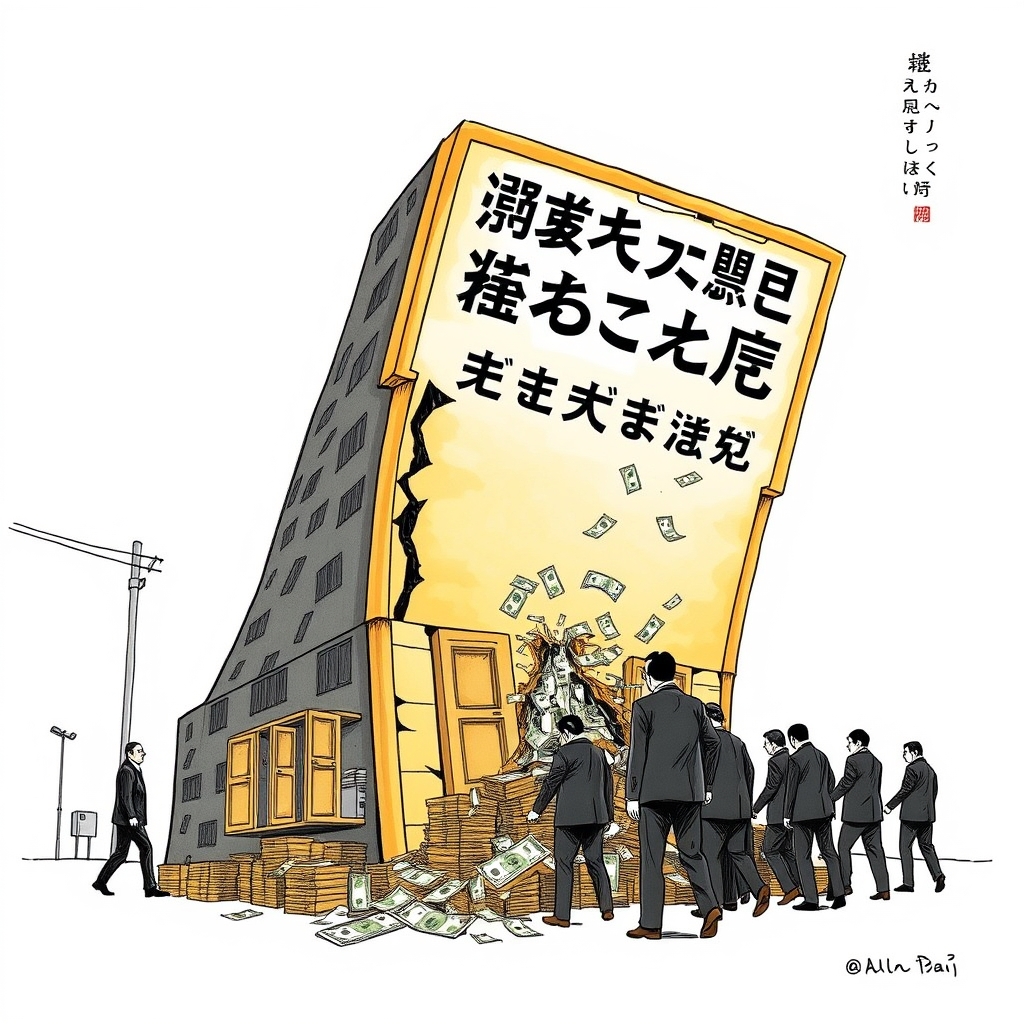
The figure that separates this arrest from the others in the case is a sales number. Investigators say the flagship "God's Esthe" location alone took in more than 1.8 billion yen—reported by several outlets as upward of 1.84 billion—over roughly three years beginning in 2023. That is the receipts of a single node in what police describe as a much larger machine.
That machine, by the authorities' own mapping, was never a storefront business. "God's Esthe" ran as a franchise of apartment rooms: unmarked residential units, booked by the hour, dressed up as "men's esthetic" salons and advertised online. Police have previously placed the network across five prefectures—Tokyo, Kanagawa, Chiba, Saitama and Tochigi—with an estimated 26 apartment rooms in Tokyo alone and several hundred therapists cycling through them. "Men's esthe" (menzu esute) is a real and mostly legal massage category; the illegal variant sells the same booking as a front for paid sex, and does it in wards where any sex business is banned outright.
The zoning is the whole of the alleged crime. Fuei-ho does not merely license the sex trade; it walls it off from designated districts—near schools, stations and residential blocks—and running a sex business inside those walls is an offense regardless of what the customers consented to. An apartment in the wrong ward is, in the eyes of the statute, the violation.
A Brand That Keeps Coming Back
This arrest is the newest link in a chain police have been working since winter. On February 17, 2026, the Kanagawa-led task force conducted a simultaneous crackdown that netted 15 people tied to "God's Esthe." That sweep did not kill the brand. It scattered it.
By June, investigators had found the same business model running in Chiba under a name nudged just far enough to look new—Kamigami no Esute, "Gods' Esthe," the singular deity made plural—and on July 1 they arrested seven people, including a 43-year-old alleged owner, over an apartment operation in Funabashi. Police estimated that single Chiba unit at roughly 10 million yen a month. Across the prefecture they counted about 25 affiliated rooms still turning under the franchise.
The pattern the authorities describe is a brand that treats enforcement as an operating cost: get raided, change one character in the name, reopen the rooms. Seen against that backdrop, the July 9 arrest is an attempt to move up the chain rather than across it—to reach past the replaceable room managers to a person police say sat where the 1.8 billion yen was counted. Whether the case supports that framing will be settled in the ordinary course of investigation and any prosecution that follows.
The Wider Squeeze
"God's Esthe" is one file in a year of pressure on the men's-esthe corner of the sex trade. Through 2026, police across the Kanto region and beyond have repeatedly raided apartment-room "esthetic" operations running inside prohibited zones—cases in Chiba, Fukuoka, Okazaki and elsewhere have followed the same script of unlicensed sex sold under a massage label in a banned district. The category has drawn official attention precisely because it hides so well: no storefront, no signage, just a rotating set of residential rooms and an online listing.
For now, what the record shows is bounded. One man has been arrested on one zoning-based charge covering two months of alleged operation. The 1.8-billion-yen figure and the multi-prefecture map are the police's account of a business investigators are still taking apart. What the arrest signals is the direction of travel: five months after they first broke up "God's Esthe," authorities say they have booked the man they believe built it.
This article is compiled from July 9–10, 2026 reporting by Fuji News Network (FNN Prime Online), Nippon TV (NNN), Television Kanagawa (tvk) and the Kanagawa Shimbun (Kanaloco), carried in part via Yahoo! News Japan. Facts are attributed to those reports and to the police. The suspect's age, occupation and residence are given as reported; the sales figure, store counts and prefecture map are the authorities' figures. The allegation is unproven, and points that remain unconfirmed are noted as such.